May 27, 2026
Episode 60 - Michael Freeman Ph.D
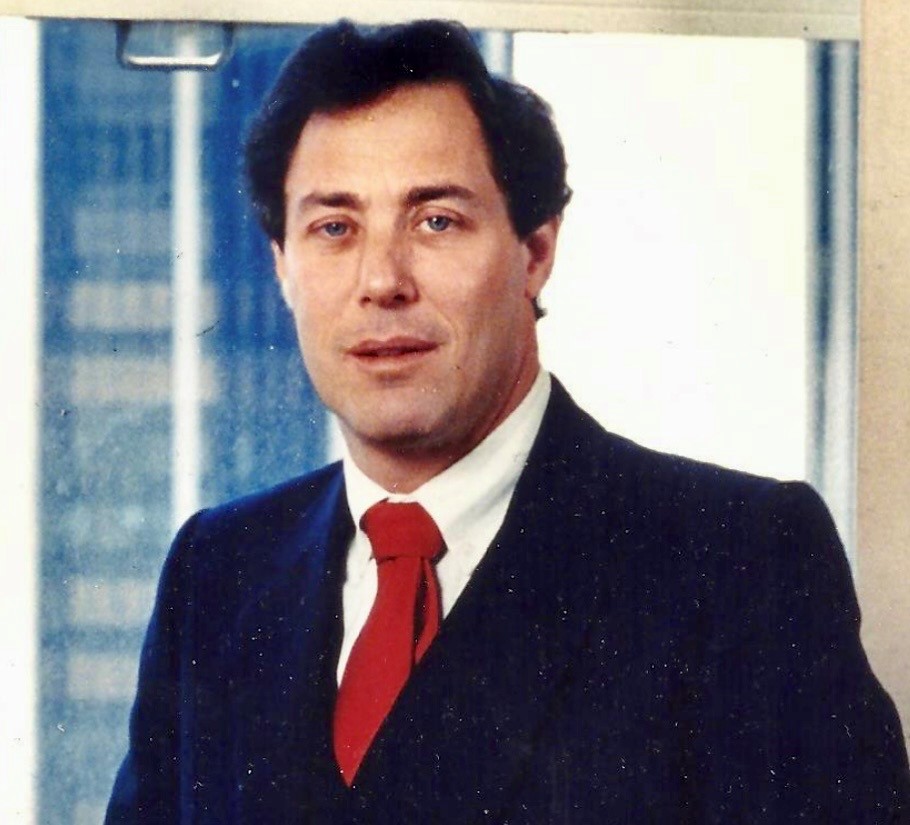
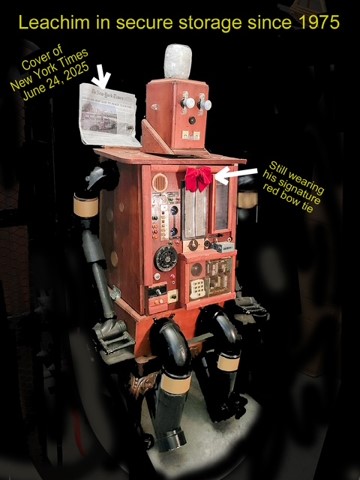
For decades, one of the most important missing links in the history of artificial intelligence has been sitting quietly in storage. It’s soon going to be owned by a major institution. How do I know? I’m in charge of the project. I’m just starting my search. My client is Michael J. Freeman,,.Ph.D., an American inventor, who is widely recognized across the technology, science, toy, and education industries.
We have worked together over the last few decades. The biggest bonanza was when we secured a major spread about Michael’s ACTV invention in Business Week. Thank you writer Otis Port.
Long before today’s AI revolution, American inventor Freeman created a groundbreaking educational robot named Leachim (an anagram of Michael) — a six-foot-tall computerized teaching machine that astonished students, educators, scientists, and the media in the early 1970s.
Now, after years hidden away while Freeman’s career expanded into interactive television, educational toys, telecommunications systems, and advanced behavioral technologies, Leachim has finally emerged from the closet once again — not as a forgotten curiosity, but as a major technological achievement deserving preservation by a major institution.
Decades before Siri, Alexa, ChatGPT, or adaptive learning systems, Leachim was already demonstrating many of the foundational concepts associated with modern artificial intelligence. Developed in 1974 and tested in a Bronx public school classroom, the robot contained encyclopedic and curricular information, verbally addressed students by name, adjusted its teaching speed to individual learning needs, remembered personal interests and hobbies, and demonstrated what students described as “infinite patience.”
Children adored the experience. Some openly admitted they preferred learning from Leachim over learning from human teachers because the robot never embarrassed them, never became frustrated, and encouraged them to keep trying until they succeeded.
Leachim was not science fiction. It was a functioning educational AI robot decades ahead of its time.
The robot quickly became a national media sensation, appearing on television programs including The Phil Donahue Show, where audiences struggled to believe there was not a hidden operator inside the machine. There wasn’t.
Freeman would later create or influence technologies and products that became part of everyday American life, including the hugely successful 2-XL smart toy, interactive cable television systems through ACTV Inc., and numerous educational robotics concepts later licensed by major toy manufacturers including Fisher-Price, Hasbro, CBS Toys, and View-Master Ideal.
Yet Leachim remains the origin point — the prototype that helped define an entirely new relationship between humans and machines.
Its historical importance extends beyond robotics. Leachim represents a rare convergence of American invention, education, psychology, speech synthesis, behavioral learning systems, and early human-computer interaction. It anticipated today’s debates about personalized learning, emotional connection to machines, adaptive instruction, and AI-assisted education by more than half a century.
The story surrounding the robot is equally extraordinary.
In 1975, after a television appearance in Chicago, Leachim was reportedly stolen while being transported back to New York. Lloyd’s of London offered a reward based on the robot’s insured value, and suspicions of corporate espionage circulated widely at the time — further cementing Leachim’s legendary status in early technology history.
Now, after being carefully preserved for years while Freeman pursued other ventures and innovations, Leachim is being reintroduced to the public alongside original prototypes, patents, inventor notes, educational materials, and commercial descendants that trace the evolution of interactive learning technology from the 1970s to today’s AI era.
This is more than a robot.
It is a missing chapter in the story of artificial intelligence.
At a moment when society is urgently trying to understand where AI came from — and where it may lead us — Leachim offers museums and cultural institutions a rare opportunity to showcase the astonishing foresight of an American inventor whose ideas arrived generations before the world was ready for them.
Here I am: loisw@hwhpr.com
No comments yet. Be the first to say something!